
DeWitt County Busted Mugshots
A jail booking is a snapshot of one moment. Nothing more. When someone is lodged at the DeWitt County Jail, also called the DeWitt County Detention Center, intake can generate an admission entry, charge listings, bond details, and other custody notes. The Sheriff's Office makes this searchable through Citizen Connect. The tool shows who is confined now, admissions within a date range, the charges listed, and which agency made the arrest. It stops short of being a court file. Treat it as a custody window, not a case history.
Several agencies can land a person in the county jail. DCSO, Cuero Police, Yoakum Police, DPS, and others all book there. The clerk's office holds what happens next on the case path. Keep the two records straight. You avoid confusion that way.
The DCSO detention information page describes the county facility and where jail confirmation ends. Staff will confirm custody, charges, and bond over the phone. They do not track court dates. They hold no full medical or case file. An online result is one piece, never the whole picture.
DeWitt County Booking Record Fields
A booking record has layers, and each layer lives somewhere different. Some fields sit in the public search. Others need a call to jail staff. The rest belong to the district clerk. The table below sorts purpose from inference, so you know which source actually answers your question.
| Field | What it can show |
|---|---|
| Name and admit date | Identity and a recent admission window, subject to careful spelling and identity checks. |
| Booking number | An administrative identifier. Request it from DCSO if it is not in the official result. |
| Charges as booked | Charges at intake. The wording can change as a case moves through court. |
| Bond and confinement | Pretrial or current-custody information the jail says it can confirm. |
| Arresting agency | The reporting agency, which may differ from the custody agency or court. |
| Photo, court, and release | Photo display is unconfirmed; court and disposition information belongs with the clerk, not the jail. |
Two views do different jobs. Current Confinements tells you whether the system shows a person confined at the moment of the search, while Admits by Date Range covers a recent intake window. Neither one traces releases, court outcomes, or how long a photo is kept. Pick the view that fits the question. Treating a single field as the full case record leads people astray.
DeWitt County Busted Record Requests
Sometimes the public search is not enough. That is what the DCSO Open Records Request route is for. Fill out the form. Return it to kim.jalufka@dwcotx.org. Ask only for what you need, whether that is a booking sheet, charge and bond entries, release or transfer details, or a booking photo if one exists and is public. A tight, narrow request helps the records officer pull the right file fast.
- Identify the person and give a booking date or a short date range.
- Include the arresting agency and booking number when known.
- Name the specific record or correction sought, rather than asking for every document.
- Ask DCSO for a current written cost estimate before expecting copies.
- Keep the response with the court record if the question concerns a final outcome.
DCSO materials list no mugshot fee and no fixed turnaround. Texas Government Code Chapter 552 allows reasonable copy charges. The Attorney General's position is that an agency unable to produce public information within ten business days should say so in writing and give a realistic date. Note that Cuero's incident-record schedule is separate and has nothing to do with DCSO fees.
The official request page carries the form and the return instructions.
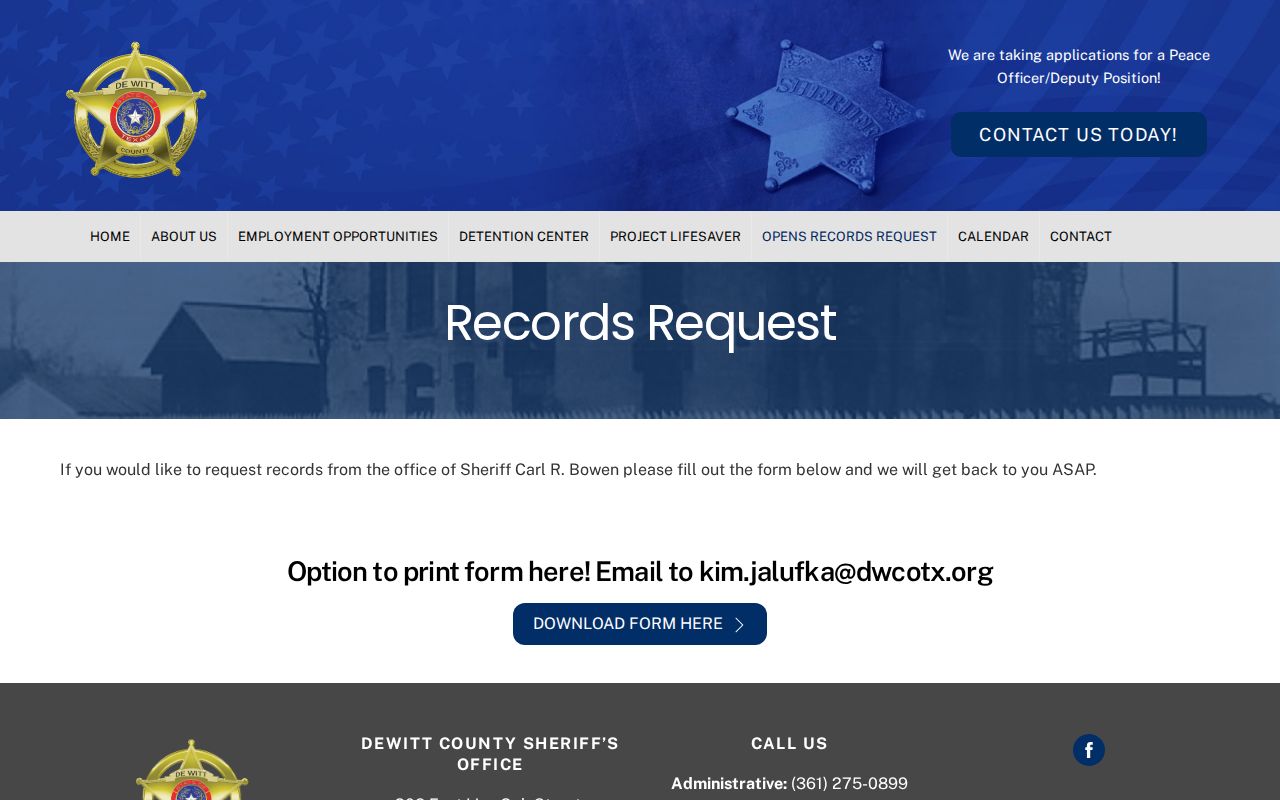
Send the form to whichever agency actually holds the record. An online roster, helpful as it is, never contains every booking detail.
Texas Busted Record Laws
Texas Government Code Chapter 552, the Public Information Act, sets the rules for inspecting or requesting public information, with exceptions carved out. It does not force every booking image online. Agencies still screen for confidential details, juvenile material, active-investigation limits, and court orders. Pair the DCSO form with the Texas Attorney General's request guidance for practical steps.
Texas Business & Commerce Code Chapter 109 governs certain publishers of criminal-record information. It covers accuracy, a contact method, and a free way to verify or correct data where the law applies. Expunction rules come from the Code of Criminal Procedure Chapter 55A. Nondisclosure seals a qualifying record from public view. Expunction can require removal or destruction of records after a court order. Eligibility turns on specific facts, so a court, a lawyer, or a legal-aid provider is the right stop for an individual case.
To fix a county record, send DCSO a focused request with the record details plus the court order or agency paperwork backing the change. If a source is removed or corrected, Google's Remove Outdated Content tool can refresh a stale search result. It cannot touch a live source record. Independent publishers may offer no-fee corrections, but those channels sit apart from court relief. They should never replace the official DCSO and court route.
The State Law Library's expunction and nondisclosure FAQ lays out the Texas path in plain language.
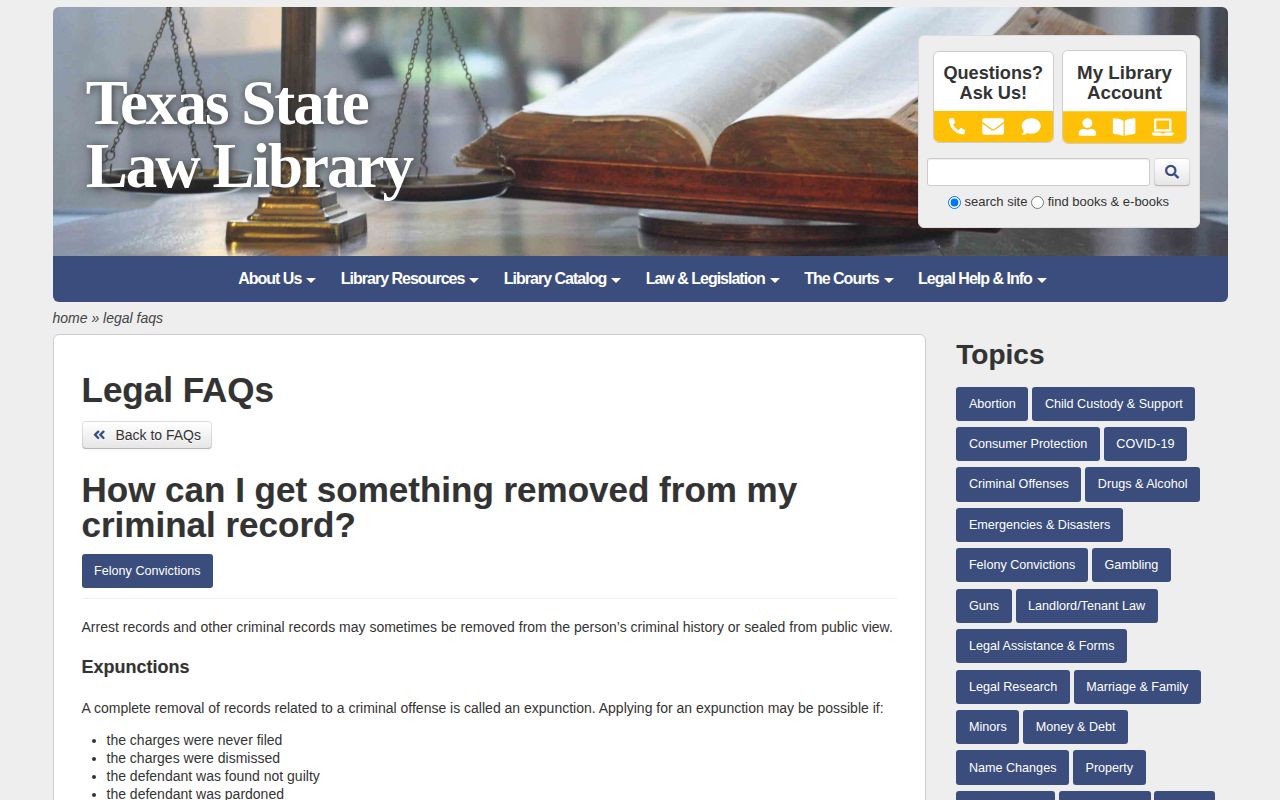
That state resource draws the line between a court remedy and a correction request aimed at one record holder.
Finding DeWitt County Busted Mugshots
Start with the official custody channel. The DCSO Inmate Confinements search is the county's main route for current confinement and recent admissions. Keep your date window tight. Note the exact time you ran the query. Use the spelling exactly as the official result shows it. The arresting-agency filter is handy too, since it separates a DCSO entry from one tied to Cuero PD or Yoakum PD.
- Check Current Confinements for a person who may still be in county custody.
- Check the last-24-hours admissions view for a recent booking.
- Use last seven days or a custom range for an older recent event.
- Check the court clerk when the question is a hearing, filing, or disposition.
- Submit a DCSO records request when the official result is incomplete or a photo is needed.
The Sheriff's detention page says staff can confirm custody, charges, and bond by phone. A roster hit is not a complete history, though. A missing result could mean a release, a transfer, a timing gap, or a simple search mismatch. Do not read too much into the gap.
DeWitt County Busted Roster Timing
The DeWitt County search gives you several ways to narrow a lookup. You can view everyone currently confined, admissions from the past 24 hours, or bookings from the past seven days. A custom date range tops out at 31 days. The sheriff's office stays quiet on two points: how fast a new booking shows up, and how long a released person lingers on the list. So start with current confinements. Then sweep the 24-hour and seven-day windows. If timing really matters, file a records request rather than guessing. The official booking search backs this view.
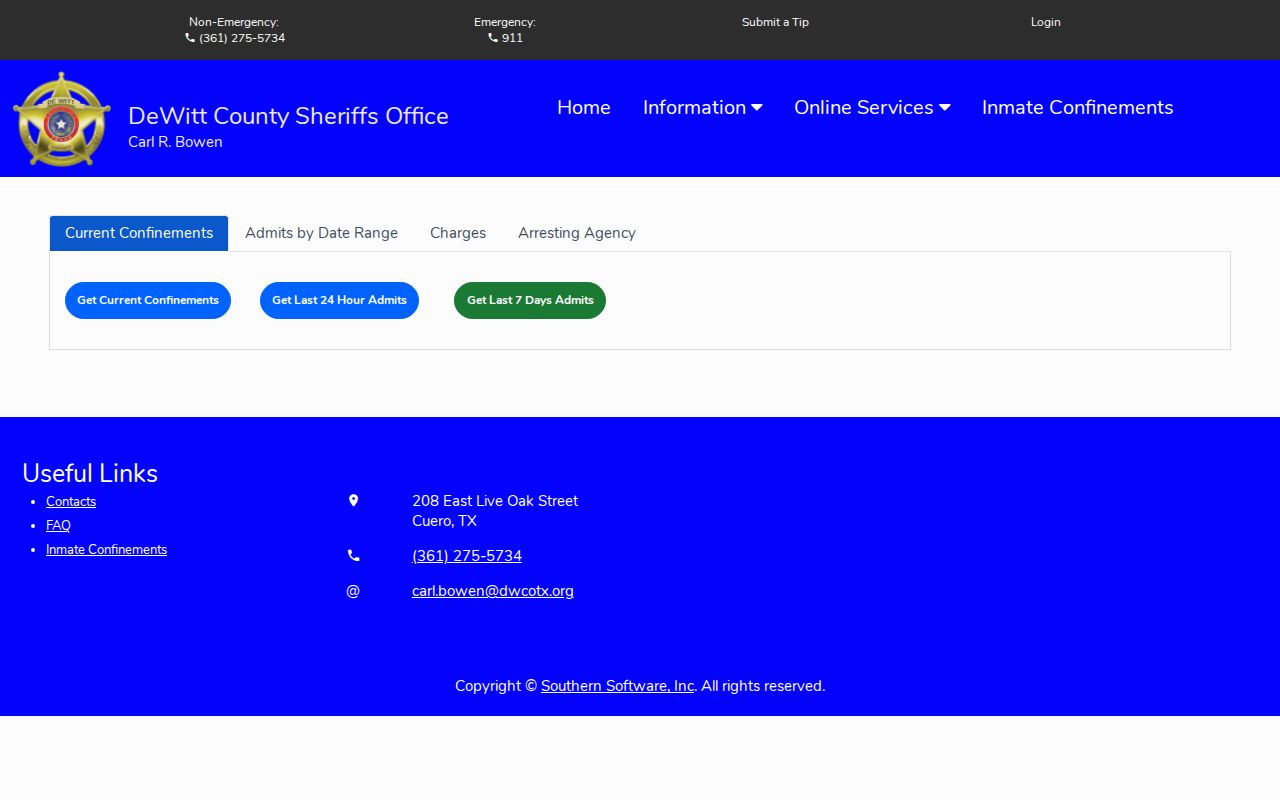
One caution about what you are looking at. The image simply documents the official search route. It is not a live booking feed, and it does not display booking photographs.
DeWitt County Roster Photo Limit
Photos are the open question on the DeWitt County roster. The Citizen Connect controls let you filter by confinement status, admission date, charge, and arresting agency. Nothing in that text is a public photo field or a written photo policy. So photo availability stays unconfirmed. A picture on some unofficial page proves nothing about what DCSO actually posts or releases today. Want a booking photograph? Use the DCSO records request instead. That is the proper channel, if the agency maintains the photo and can release it.
| Search control | Use in the DCSO portal | Boundary |
|---|---|---|
| Current Confinements | Looks for people displayed in county custody. | It is not a complete arrest history. |
| Admits by Date Range | Looks for recent admissions in a chosen period. | It does not establish continued custody. |
| Charge | Narrows a county query by the charge control. | Booking wording is an charge and can change. |
| Arresting Agency | Separates DCSO, Cuero PD, Yoakum PD, or another agency. | The arresting agency may not be the final court or custodian. |
The uncertainty cuts both ways. Claiming DCSO posts booking photos online is wrong. Claiming the agency never takes or releases them is equally wrong. Only a live official result or a written records response settles it for the record you care about.
DeWitt County Busted Booking Windows
DCSO has no separate static arrest-log page. Its Citizen Connect search folds the roster and recent-admission functions into one tool. Keep in mind what a date window actually tells you: the period you searched, nothing more. It promises no instant posting schedule. It is not a permanent archive either.
| Portal view | Best use | Important limit |
|---|---|---|
| Current Confinements | Confirm someone shown in county custody now. | Released or transferred people may no longer appear. |
| Last 24 hours | Check a same-day or overnight admission. | The window moves continuously and is not an instant-posting promise. |
| Last 7 days | Reconcile a recent event with county admissions. | It is a query range, not a fixed weekly blotter. |
| Custom dates | Check a defined event period. | The official maximum is 31 days, with no stated archive retention. |
The supported controls are dates, charges, and arresting agency. Local news coverage can add useful text context around a case. For current custody, though, the jail record is the authority. No official booking-photo feed exists. There is also no fixed weekend posting schedule to count on.
DeWitt County Booking App Limits
DeWitt County Sheriff Tx for iOS and its Android counterpart advertise a crime map, events, contacts, push notifications, social links, and tip submission. Read that list closely. Neither store description mentions current-confinement searching or booking photographs. Treat the app as a public-safety alert and contact tool, not a photo roster. The official Citizen Connect agency home also points to alerts, press releases, contacts, and tips.
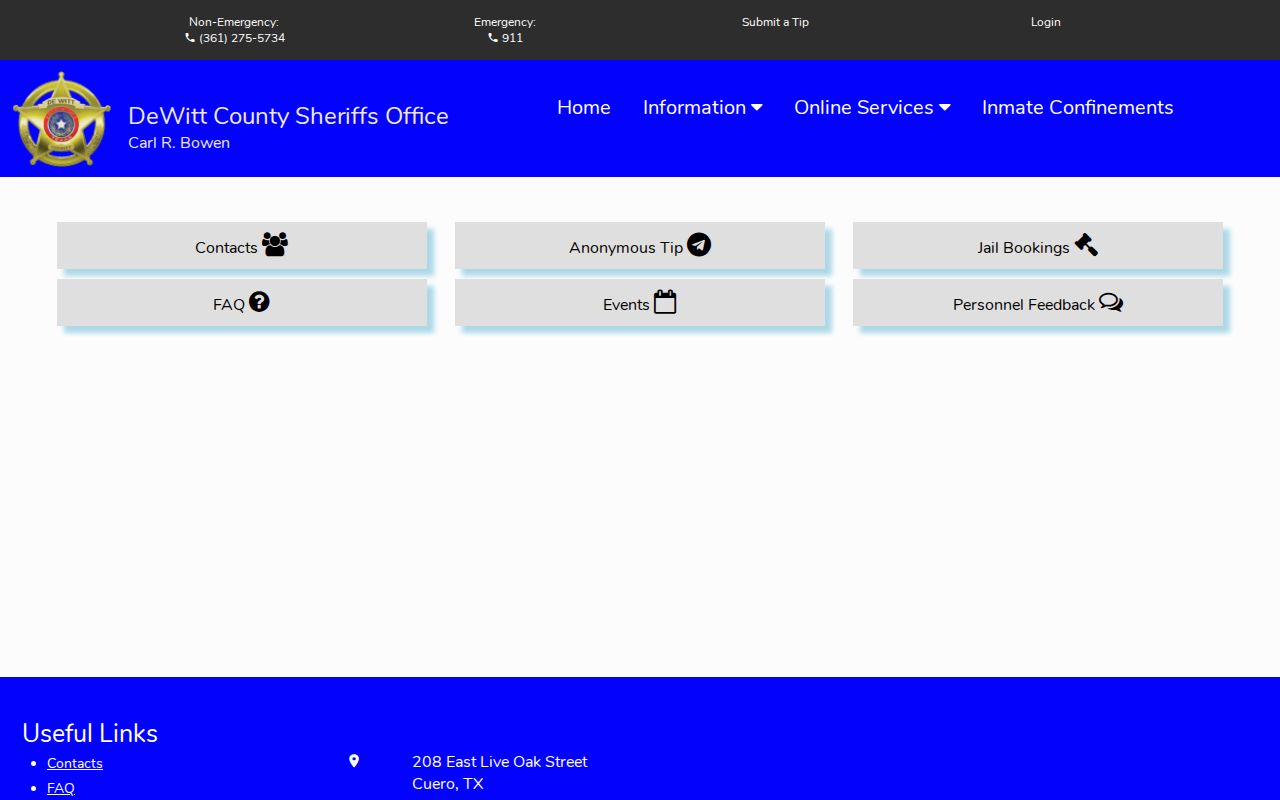
Those public-safety services round out the confinement search nicely. What they do not create is an app-based photo notification feature.
DeWitt County Busted Custody Paths
A custody lookup only answers for the system it searches. That is why keeping the systems separate matters. Otherwise a recent county admission gets confused with a released person, a state prisoner, or a federal detainee. Start with DCSO for any DeWitt County custody question. Move to the next custodian only when the facts point there.
| Custody state | Official route | What it answers |
|---|---|---|
| Just booked or currently confined | DCSO Inmate Confinements | County confinement or recent admission, subject to the selected window. |
| Released or transferred | DCSO records request and the court clerk | The roster may no longer show the person; court disposition remains separate. |
| State custody | TDCJ offender search | A Texas state-custody record, not every DeWitt booking. |
| Federal custody | BOP inmate locator | Federal incarceration from 1982 forward, not a county booking record. |
| Immigration custody | ICE Online Detainee Locator | Current ICE custody and some recent releases, using its required identifiers. |
For state offenders, TDCJ's inmate information materials describe a search of its own. No public profile-photo field appears in that description, though. The BOP and ICE locators are custody tools too, not photo galleries. A federal or immigration result should stay separate from the original county charge. ICE's locator is picky: you need an exact A-number plus country of birth, or an exact name with country of birth and date of birth. It also excludes anyone under 18. Those demands make clear that an ICE check is its own custody search, not a continuation of a DCSO booking lookup. The official TDCJ inmate-information page explains the state-custody route.
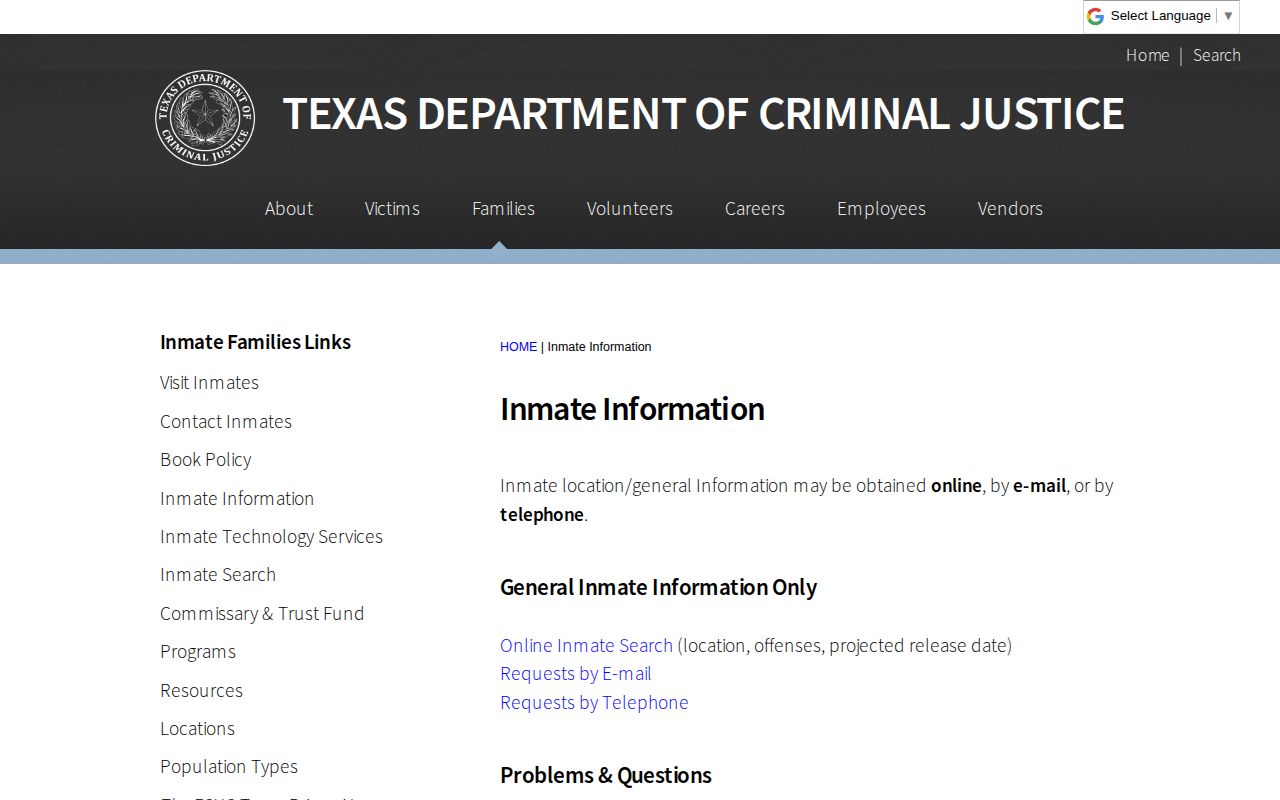
Use that state route with care. It applies only after you have separated the county-custody question from any later state record.
DeWitt County Bond and Court Records
The detention page draws a clean line between two jobs. Jail staff will confirm custody, charges, and bond. Court dates? Not their department. So plan on two stops. Ask DCSO about present custody and bond first. Then go to the right clerk for a hearing date or case outcome. One more caution: a missing roster entry proves nothing. It does not mean someone bonded out, transferred, or resolved the case.
DeWitt County Court Record Handoff
The DeWitt County Clerk offers online indexes covering criminal, civil, and probate material. Note: the office warns that only indexes are available online because of confidential information. District-level matters belong to the District Clerk. Its 2026 notice says county-site construction can limit new docket posting, so a phone call may beat the web page. The statewide re:SearchTX portal needs an account and searches available court material, though not every local case will appear.
A few terms help here. An arraignment is where the court formally informs a person of the charges. Bond is a pretrial release condition. A disposition is the final outcome, such as a dismissal, plea, acquittal, or judgment. The disposition, not a booking entry, tells the later legal result. The official District Clerk page is the source shown below.
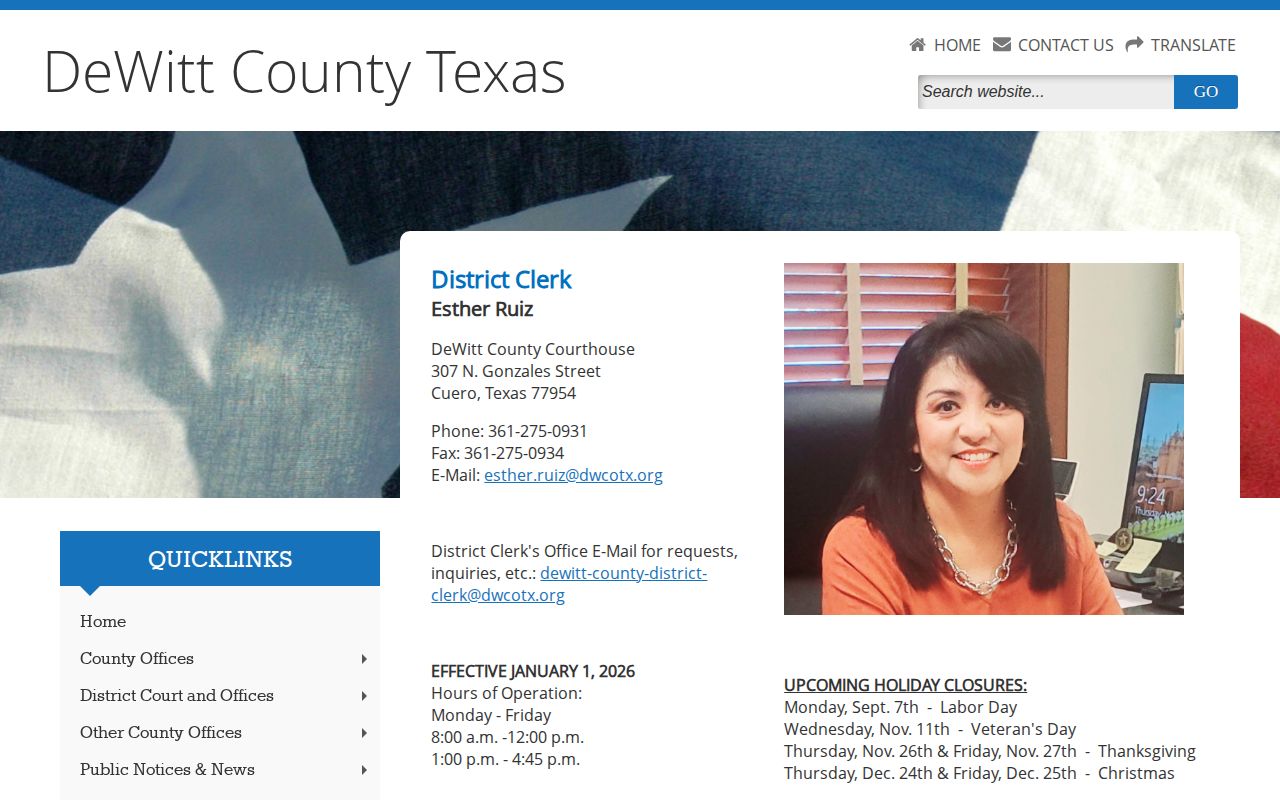
This clerk route matters because the jail itself sends court-date questions straight to the court system.
Texas Withheld Busted Records
Some records sit outside ordinary booking content entirely. Confidential juvenile information, sealed material, and expunged records all fall in that category. Texas law backs this up. Chapter 109 governs confidential juvenile information. Chapter 55A lays out expunction mechanisms. When an agency withholds a record or an order covers it, do not rebuild it from a cached secondary page. Ask the agency or court directly how the order affects the record you want.
Yoakum Busted Record Boundaries
Yoakum sits right on the DeWitt and Lavaca county line. That split matters for arrest searches. A Yoakum Police Department bust could land someone in either county's jail, so guessing at the feed is a mistake. Start with the DCSO arresting-agency filter for DeWitt County custody. If the name does not show up there, confirm which facility actually holds the person before assuming anything.
DeWitt County Dispatch Context
DCSO posts dispatch statistics covering 2018 through 2022. The numbers tell a story of slowing activity. Traffic stops fell from 6,275 in 2018 to 4,013 in 2022. Warrant service dropped too, from 348 down to 190. These are dispatch categories, though. They do not count bookings, arrests, or available records. No public annual county booking total has surfaced.
DeWitt County Busted Jail Context
The DeWitt County PREA audit describes the jail itself. It lists 17 single cells and 18 multiple-occupancy units. That is facility context only. It is not a booking count. It produces no mugshots. For anyone in current custody, the DCSO search remains the route. The jail's public contact line exists for confirming custody, charges, or bond within whatever limits the jail itself states.
Busted Mugshots by DeWitt City
A city police department and county custody are two different things. Cuero, Yoakum, and Yorktown each have their own municipal route. Those routes sit apart from the county roster and from any records fallback. When a person is lodged at the DeWitt County Jail, DCSO is the practical county-level option.
- Cuero Busted Mugshots: Cuero PD arrests can appear in the county system when the person is lodged there; the city also has an incident-record request route.
- Yoakum Busted Mugshots: use the county route only for DeWitt County custody, then confirm the lodging agency because Yoakum spans two counties.
- Yorktown Busted Mugshots: no incorporated-city police log was located; the Sheriff is the general county route. Yorktown ISD Police is a separate school agency.
DeWitt County Record Retention
Texas State Library and Archives Commission Schedule PS sets minimum retention rules for public-safety records statewide. It does not say how long DCSO keeps a web result viewable. Booking photographs are not listed as a distinct series. So DCSO itself must decide whether a given image belongs with an arrest report, a jail register, a digital booking record, or something else. An expunction order can override ordinary retention and disclosure rules.
The schedule draws sharp lines between record types. Activity logs and dockets generally carry a two-year minimum. Arrest reports and fingerprints stay six months for Class C or fine-only matters. Other offenses mean 75 years, or until the date of death. County jail registers are permanent. These minimums can be revised, and legal holds may extend them. Nothing in Schedule PS assigns a public web lifespan to a DeWitt booking result.
Older local material is a different hunt. The DeWitt County archival and microfilm route can help identify what repositories hold. That does not mean current jail photos were transferred there. Current custody stays with DCSO. Older records call for a DCSO request plus an archival inquiry. Historical state corrections photographs belong with Texas archival or TDCJ pathways.
DeWitt County Secondary Records
Start every search with official DCSO records, the arresting agency, and the court. Secondary sites tied to Busted Newspaper, RecentlyBooked, Mugshots.com, Arrests.org, Mugshots.zone, and JailExchange can be incomplete, delayed, duplicated, or simply wrong. None of them is an authoritative custody record. Their displays say nothing about official DCSO photo policy either. Never let them replace the county search or the clerk check.
DeWitt County Today's Arrest Report stands out as the strongest current local news route. Its text reports can carry dates, locations, charges, bond, and arresting agency. Coverage spans DCSO, Cuero PD, Yoakum PD, and DPS. Treat it as journalism rather than an official roster. It has not shown booking photos. The Cuero Record archive adds historical arrest-report context, not a current photo source.